
Stop me if you’ve seen this before. You’re browsing Twitter or Bluesky, and come across yet another classic game decompiled and ported to PC. Or you look through fan game videos on YouTube, only to see a flood of insane projects that felt like they wouldn’t have been possible even 5 years ago.

Or heck, you look for videos about titles like Super Mario 64, only to find 50,000 fan-made ports for every system under the sun. GBA, PlayStation 1, Sega Saturn…

It’s like the number and quality of fan games has skyrocketed in recent years, with many popular projects pushing the very boundaries of what’s possible on their respective systems.
So, why is this? How did fan games and mods go from an amateurish, low-key affair into something rivalling the best of the industry? And why exactly are there so many of them now?
Let’s find out!
An Ever-Growing Community
With our first port of call being online communities for these projects. Since well, they’ve just exploded in the last couple of decades.
Like, don’t get us wrong, there have always been sizeable communities for certain fan game scenes. Mario Fan Games Galaxy and SMW Central have existed for decades, as have ROM Hacking.net, Sonic Fan Games HQ and PokeCommunity.
But it’s hard to deny they’re a lot more popular now. That the number of people interested in making these games and mods is significantly higher than ever before.
And numbers do have a big impact in how advanced a field can become. The wisdom of crowds, for all its flaws, does seem to be a real thing.
Just ask any game developer who’s seen what happens when their game hits retail. They may have thought they’d found all the bugs there, or worked out the optimal strategy for getting through the game quickly…
But the speedrunning community and internet as a large quickly proves them wrong on both fronts. With more people doing the research, there are more things being tried out, more discoveries being made and more optimisations being found every day. A small but dedicated group will never compete with that.

Same goes with tech and the internet when people learned to code, YouTube when it became popular enough to attract serious filmmakers and documentarians, and the blogging scene when it moved from a niche interest in a major mainstream trend.
The more popular an art form becomes, the higher quality the best works in that field tend to be, and the higher the bar for quality rises in general.
ROM hacks, fan games and mods aren’t exempt from this. When the communities got bigger, more people came in with more unique ideas, and there were enough resources available to research and improve everything in sight.
Better Online Resources
Speaking of resources, it’s also worth noting how much better online resources for fan game and mod creators are nowadays.
In the earliest days, it was still very much a guessing game in many places. We vaguely understood how the engine for a game worked, and there were some impressive projects being developed regardless…
But we simply didn’t have the knowledge available that we do now. The inner workings of even popular games like Super Mario World, Super Mario 64 and The Legend of Zelda: Ocarina of Time mostly remained a mystery.
Now that’s all changed. Now, the communities for these games know almost everything about how they work internally, and how they were programmed by the original developers.
Decomps are a big part of this. Prior to these existing, modifying a game was a tedious, annoying affair. You usually had to make any major new resources or programming changes with assembly code, you had to figure out how to patch the title and manually override functions to run your code, and even working out how basic elements like character speeds and health bars worked required a ton of trial and error.
Decomps fixed a lot of those issues. Now, you had a readable copy of the source code you could understand and quickly make changes to. New objects and actors could be created in a practical, easier to understand programming language like C rather than through assembly code alone. Etc.
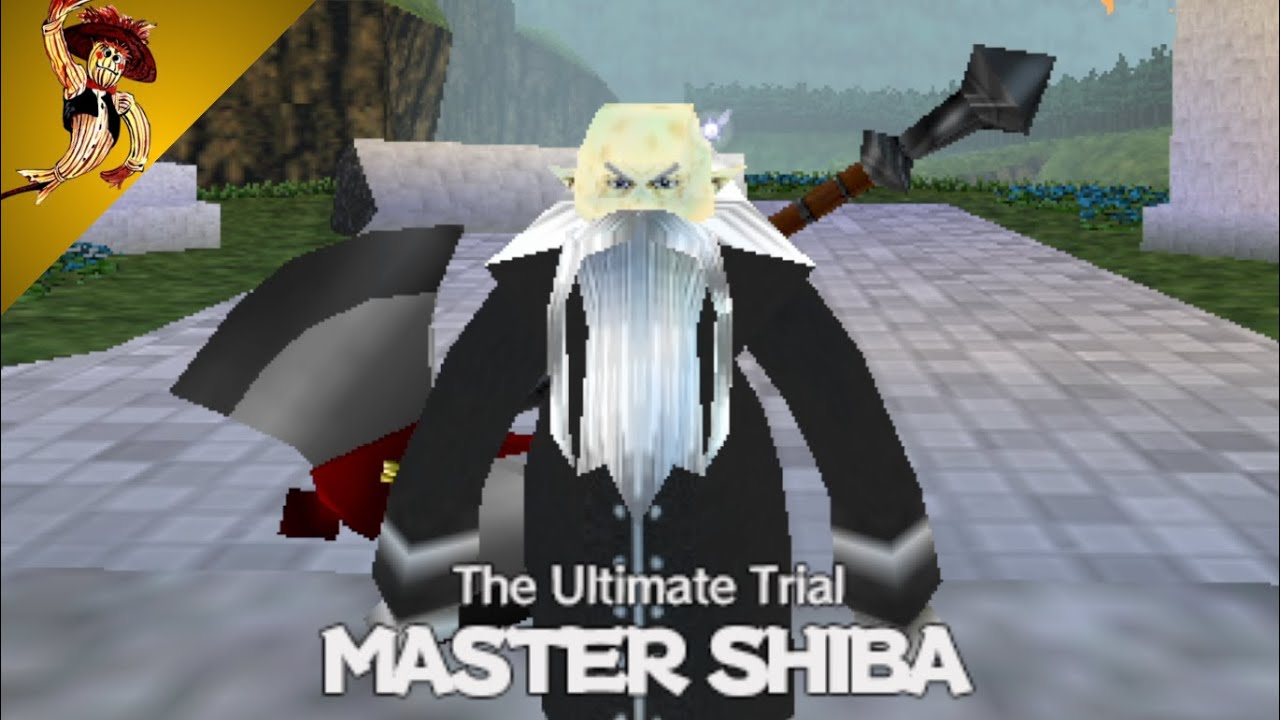
But decomps are only the tip of the iceberg here. No, there are now lots of other resources that make mods, hacks and fan games easier to create.
For one thing, getting a good engine for the latter is easier than ever before. Not only are fan game specific engines now significantly more common (and powerful) than they used to be, but all-purpose engines like Unity, Unreal Engine and Godot are now both easier to use and better supported than anything that came before them.
So, while cloning Super Mario 64’s physics and mechanics would previously have been a tedious, multi-year affair, now there are enough assets and resources available that a competent game developer could probably put together an approximation of it in Unity or Unreal in a matter of months.
Speaking of engines, it also can’t be understated how useful the trend towards pre-made engines has been for modders here. Since well, once you understand how the something like Unity or Unreal works, you have the ability to understand the basics of how every other game using that engine works too.
Like sure, there’s going to be code specific for each game. And there are definitely going to be unique challenges regardless of the game you decide to mod…
But it’s a lot easier to figure out how to modify a Nintendo game built with Unreal engine than one using a proprietary internal one undocumented outside the company.
Other resources help a lot here too. Like say, the RAM and ROM Maps on SMW Central.
It’s not like a decomp or anything, but having the ability to see what almost every value in the game means, what it’s usually set to and the format it expects definitely makes simpler resources easier to program. Just being able to search ‘on/off switch’, ‘Yoshi colour’ or ‘powerup’ and see all the relevant RAM addresses makes a lot of custom features far easier to create.
And the list of useful resources available now just goes on and on. Tutorials for modifying particular games, source code repos for popular mods and assets on GitHub, books and manuals for writing code for all manner of obscure and not so obscure systems, forum discussions and YouTube video tutorials all over the place…

Learning how your favourite games and systems work is easier than ever.
A Change in Incentives
There’s also a bit of a social change involved here. Most notably, in how incentives for creating an ambitious mod or fan game have changed in the last few years.
In the olden days, this was very much a niche pursuit. If you made something ambitious, it maybe got a few kudos from active forum posters on your community of choice, or a nod from an early internet creator. Heck, maybe if you were very lucky (like BlazeHedgehog was with Super Mario Blue Twilight DX), it got brought up in magazines and video game TV shows.


The arrival of YouTube, Twitch and social media blew this status quo to smithereens.
Now, a popular fan game or mod could go viral in an instant. A big YouTuber could play it, and introduce it to millions of people. News sites around the world could turn it into the day’s major headline, or even bring it to the attention of the mainstream press.

Fan projects went from tiny hobby offerings, to a mass market community that could command the big bucks.
As for the people that made this happen? Well, it depends on the game of course. For Mario Kart, it was folks like TWD98, Mayro and Nathaniel Bandy. For Super Mario World, it was originally people like ProtonJon and AzureBlade49, before more recently being revived by folks like Grand POOBear and Laser Belch. For Super Mario 64… well, even some of the actual mod devs became celebrities in that field, like Kaze Emanuar himself.
This also led to a rise in contests for these projects too. These were already somewhat a thing on sites like MFGG and SMW Central, with the Vanilla Level Design Contest arguably being the most well-known of the lot…
But with the support of folks like SimpleFlips, these became full-on game jams and tournaments. There were monetary prizes up for grabs if you made the best mod, and inspiration galore from the other competitors looking to do the same thing.

The incentives were there for more and more people to involved in making fan projects, and it likely drew in professionals (software engineers, artists and designers, musicians, etc) that may not have otherwise known or cared about these endeavours.
Of course, it also had some downsides too. As we’ll get into a bit later, the rise of AI and the possibility of easy fame mean that grifters started appearing in droves as well, with half-assed recomps and mods flooding the internet as a result.
And there’s definitely been some sort of drift towards individual creators and communities looking to monetise outside of existing communities too. Plenty of people started seeing mods and fan projects as potential career opportunities rather than hobbies, with the downsides that entails.

But overall, it’s led to an explosion in high-quality projects too, since the incentives are now much higher for doing well.
Increased Expectations
Expectations likely played a role here too. Why? Because they showed what was possible, and gave people an incentive to outdo each other.
For example, if you talked about making a super-advanced Super Mario 64 hack where Mario, Link and Kirby are playable characters you can switch between at any time, and the levels are all based on other Nintendo properties, it’d be really easy to get discouraged from actually making the game.
After all, there aren’t any other hacks with that level of tech involved, and the community will likely see you as an idea guy of the most embarrassing type.
Hence many people usually kept their ambitions in check. They did try to make things different in some ways, but the overall structure of their game was often kept to a more realistic scope.
Social media, YouTube and a rise in project complexity changed that equation. Now, you know that crazy impossible things are actually doable in your hobby of choice. You know that it’s possible to give Mario different outfits in Super Mario 64, or add Metal Slug style bosses to Super Mario World. You know that a Pokémon game can have more than two regions, or a larger Pokédex, or real time battles.

So, there’s an incentive to go and swing for the fences. To try and make your dream project a reality, no matter what it takes.
Because other people have shown it can be done.
Skill Overlap
There are also more people getting in fan games and projects that have commercial game development skills, or want to get into the actual industry. Possibly in part because the games industry was comparatively tiny 20 years ago, or because indie games weren’t such a large part of it.
But this also means there are people looking to get into fan games as a side hobby for their main game development job, or who see it as a stepping stone to their first role in the industry, and they’re a lot more technically inclined that folks who came into the field from some other industry might be.
Experience
Another obvious factor is that many people who worked on these projects before have stuck around for the long haul, and gotten significantly better at understanding the tech they work with.
Again, take Kaze Emanuar for example. His first few hacks were fine, but it’s hard to argue they weren’t fairly dated by today’s standards:
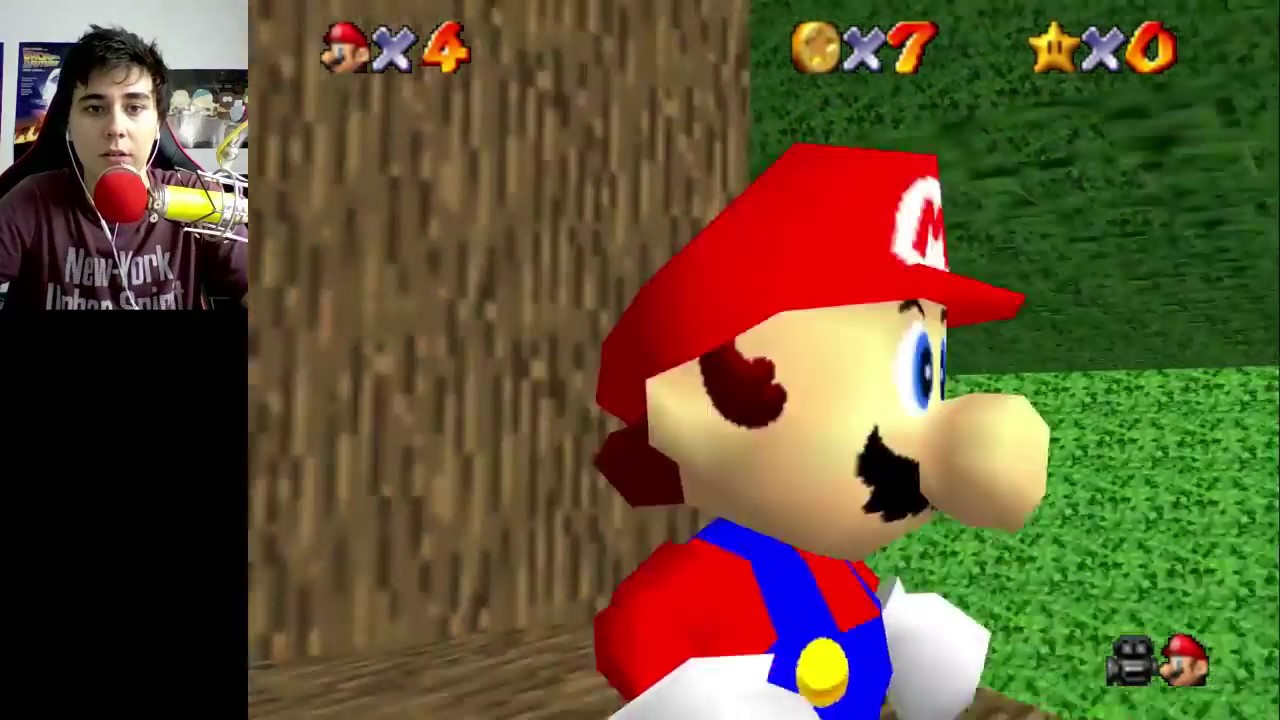
Now compare to his work on Return to Yoshi’s Island, and it’s not even a fair comparison:
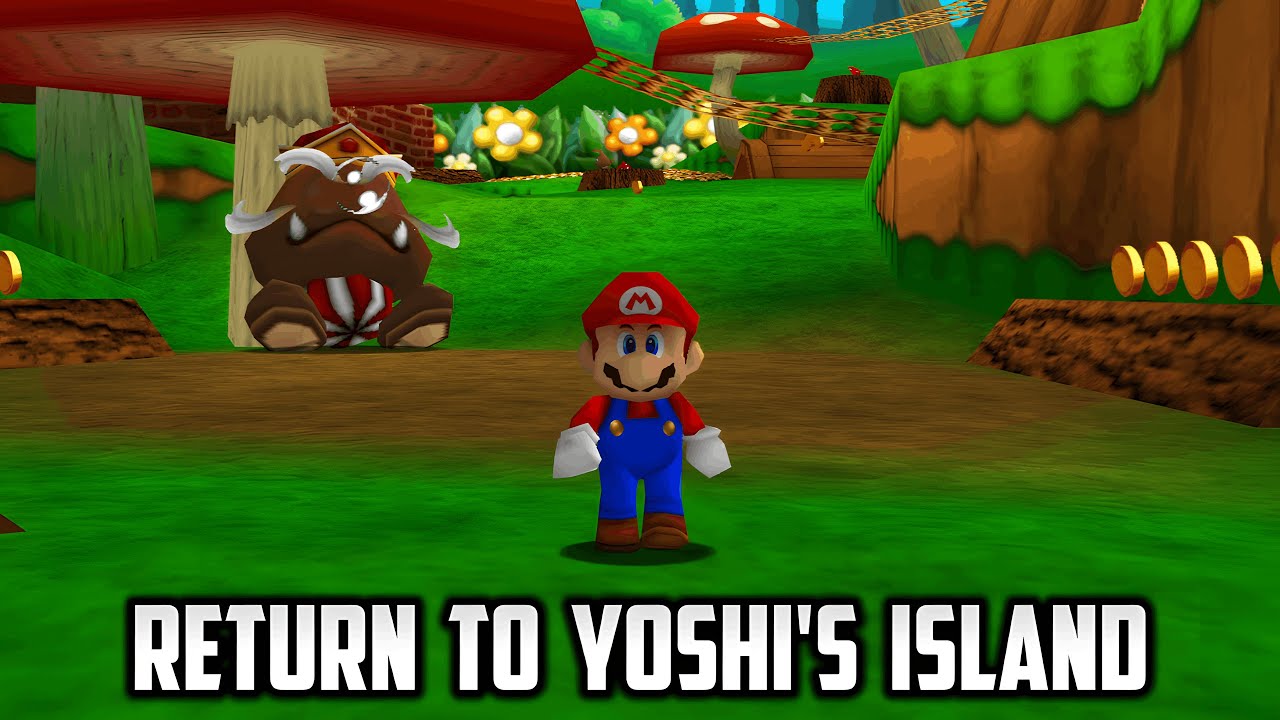
He’s simply a lot better at making Super Mario 64 ROM hacks now.
Same goes with many other people working on these projects. They’ve often been at this game development stuff for over a decade at this point, and their work has gotten better as a result. So, the higher number of creators with years of experience is obviously going to have an impact.
Better Game Design Knowledge
There’s also an interesting factor that combines resources with skill too. Good game design has become better known and accepted in the community.
Oh sure, lots of people did try their hardest to make their hacks and mods fair. Or to create levels that felt at least somewhat like something you might see in a normal game.
But there was definitely a level of amateurishness here, a distinct feeling that many old school fanworks were trying to learn Nintendo design standards from first principles. People’s grasp of fair level design was tenuous beyond “don’t make I Wanna Be the Guy: Super Mario World Edition”.
And this was really obvious when you looked at many popular games of the time. Super Mario Bros style games tended to have sprawling levels filled with enemies and traps and minimal checkpoints. Zelda games had dungeons with puzzles best solved through moon logic, and a lack of any direction whatsoever. Pokémon games had ridiculous level curves and over-optimised NPC teams that made even generation 2 look reasonable by comparison. Etc.

Modern fan games are not like this. Modern fan games actually feel like normal games.
Which I suspect is where the resources aspect comes into play. In the olden days of the internet, game design was a rarely discussed, often esoteric discipline mostly confined to the games industry. Heck, in many cases it’s clear it wasn’t much of a priority there either, at least if the flood of terrible licensed games is anything to go by.
The growth of the modern internet changed all of this. Now, there were official breakdowns by folks in the industry, courtesy of the Game Developer’s Conference and the (now archived) Gamasutra blogs. YouTube channels about the subject became commonplace, with folks like Game Maker’s Toolkit explaining simple principles in an easy-to-understand way:

And heck, in some cases, we even had industry folks go and create channels themselves about the same thing. Like Masahiro Sakurai did a few years back:

So, fangame design improved as a result. What was previously a very unpolished medium became something that could stand alongside official titles instead.
The Rise of AI
Finally, we’ve got AI. Yes, we know. A lot of people hate this stuff, and there is a ton of anger towards the rise of AI coded recomps and fan projects in the retro gaming scene.
And yes, there are a lot of reasons to dislike it, whether that’s stolen work, the environmental impacts, the user being unable to understand the project they supposedly made, etc. AI is a problem, especially as it’s being used today.
But on a purely statistical level, it’s hard to deny this has had a serious impact on the number of impressive mods and fan games being released online. Whether it’s that 3DS port of Breath of the Wild or that Super Smash Bros game with infinite custom characters, that Mario Kart Wii recomp or tons of previously abandoned decomp projects, the rise in AI tooling has allowed creators to build games they’d otherwise be unable to make at all.
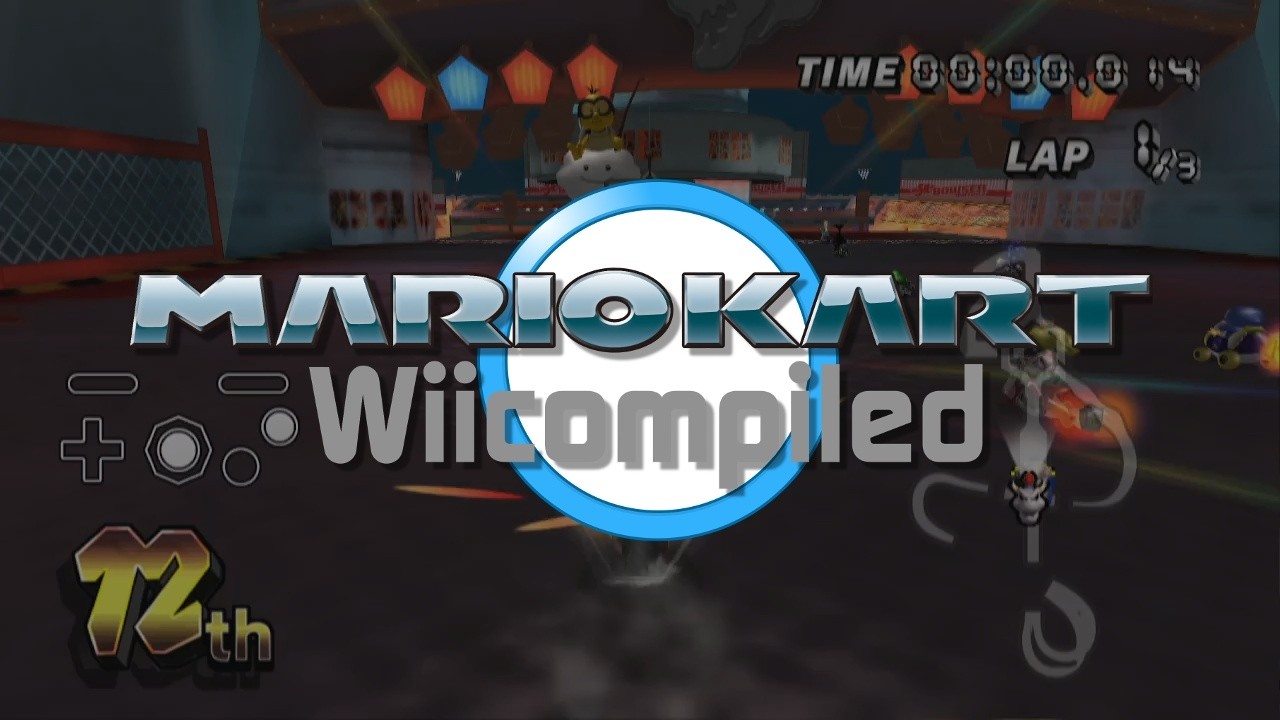
So, regardless of the moral issues involved here, AI has had a major impact on the number of mods and fan games being made, and will probably continue to do so for a while.
In Conclusion
Either way, those are some of the reasons mods and fan games have become so common in recent years, and why the standard has seemingly skyrocketed online. Some of this is definitely due to dubious things like grifters, marketers and AI users, but it’s also in part due to the growing level of experience displayed by long-term creators, an increase in the number of resources that can be used to make an impressive game, and a community that heavily promotes these works through YouTube and social media.
Still, what are your thoughts here? What impressive mods and fan games have you seen recently? And why do you think they’re so much more common than they used to be?
Leave your thoughts in the comments below, or on our Discord server today!